

A New Approach to Shipping Mailers, California's Packaging Law, and an Update on Corrugated Prices
Packaging news has a way of connecting things you might not expect. This month, a new mailing system reminded me of equipment that's been making corrugated boxes for years. California's packaging law continues to move forward, and we finally have an update on those paper price increases announced in September.
Three different subjects, each with something worth understanding if you're involved in buying or producing packaging.
Right-Sized Packaging: Same Idea, Different Package
In October, Pregis introduced its Sharp InfinX automated mailing system. It makes shipping mailers sized to fit individual orders, using paper, polyethylene, or cushioned polyethylene materials.
The minute I read about it, I thought of Packsize, a company that's been making equipment for on-demand corrugated boxes for more than 20 years.
Packsize produces corrugated boxes to fit individual orders rather than requiring businesses to keep a large inventory of finished box sizes. Pregis is applying a similar idea to flexible shipping mailers. Brilliant!
Different materials and structures, but basically the same goal: make the package fit the product rather than finding the closest available package.
We've all received something small in a box that's three times larger than necessary. From the shipper's perspective, stocking a box for every possible product size or combination isn't practical. But all that extra space adds up in materials, storage, and shipping costs.
Systems like these offer another approach, particularly for businesses shipping large volumes of products in different sizes. Of course, the equipment has to make financial sense, and the package still needs to protect what's inside.
The PackagingChic translation
What caught my attention wasn't just the new equipment. It was seeing a familiar packaging solution applied in a different way.
There's a lot of attention on developing new materials, but sometimes an improvement comes from changing how packaging is made or used.
Even without automated machinery, businesses can benefit from reviewing their existing shipping cartons and mailers. Are they the right sizes for what's being shipped? Is there room to reduce materials or improve the packing process?
It's a good example of packaging innovation being as much about the process as the package itself.
California's SB 54: The Law Is in Effect, and the Program Is Taking Shape
California's SB 54 packaging law has been getting plenty of attention, and October brought another important development. Lots of layers here!!
First, a little clarification. California's permanent SB 54 regulations took effect on May 1, 2026. The law establishes an Extended Producer Responsibility (EPR) program, which places more responsibility on producers for the packaging they put into the market, including helping fund collection and recycling.
On October 13, Circular Action Alliance submitted its revised plan to CalRecycle outlining how the program would operate. The updated plan reflects feedback from more than 2,400 public comments and addresses areas such as recycling, material management, and program costs. Who is Circular Action Alliance? Here’s a snippet from their website:
As a nonprofit, producer-led organization, CAA is committed to delivering harmonized, best-in-class compliance services to all producers to advance an efficient and effective circular economy.
CalRecycle is reviewing the plan, and additional public comments are being accepted through November 13. The agency has 75 days from submission to complete its initial review. The plan hasn't been approved yet, but the regulations themselves are already in effect. Who is Cal Recycle? Here’s the snippet from their website:
California’s Department of Resources Recycling and Recovery (CalRecycle) brings together the state’s recycling and waste management programs to move the state towards a circular economy that reduces waste and reuses all materials.
The PackagingChic translation
For brands, one of the practical challenges is knowing exactly what's in their packaging.
Consider a bottle of lotion. There's the bottle, pump, label, and perhaps a folding carton. It's one finished product, but several different packaging components, each potentially subject to different reporting requirements.
And here's where things can get complicated. Finding the exact specifications for packaging that's been in production for several years isn't always easy. Materials may come from different suppliers, and information about coatings, laminations, and other components may not be readily available.
For companies selling products in California, the first question is whether they're considered a producer under SB 54. Some registration and reporting requirements are already in effect, so this isn't something to leave until the program plan receives final approval.
From a packaging standpoint, having accurate specifications is an important part of being prepared. It's also useful information to have whenever you're considering a change in materials or suppliers.
Corrugated Pricing: What Happened After September?

Last month's Packaging Watch covered announced containerboard price increases and how they might affect corrugated packaging.
Now we have some actual numbers.
According to Fastmarkets RISI data reported by Packaging Dive on October 19, containerboard prices remained flat in October following September increases of $70 per ton for linerboard and $100 per ton for corrugating medium.
Those September increases were lower than some of the amounts originally announced by paper producers.
The PackagingChic translation
This is a good example of why a paper mill's announced price increase doesn't automatically mean the finished corrugated box price goes up by the same amount.
Paper has to move through the supply chain before becoming a finished box. Corrugated converters have their own material costs, production requirements, and supplier arrangements. They also have existing inventories and customer commitments that can affect when pricing changes.
And paper is only part of the cost. Board grade, box dimensions, printing, converting, quantities, and freight all contribute to the finished package.
October's flat pricing doesn't erase September's increases, but it does give us a clearer picture of how the market responded.
If you're planning corrugated packaging purchases for early 2027, it's worth checking current pricing and asking how long quotations will remain valid. There may also be opportunities to review specifications or quantities before placing the next order.
What I'd Check This Month
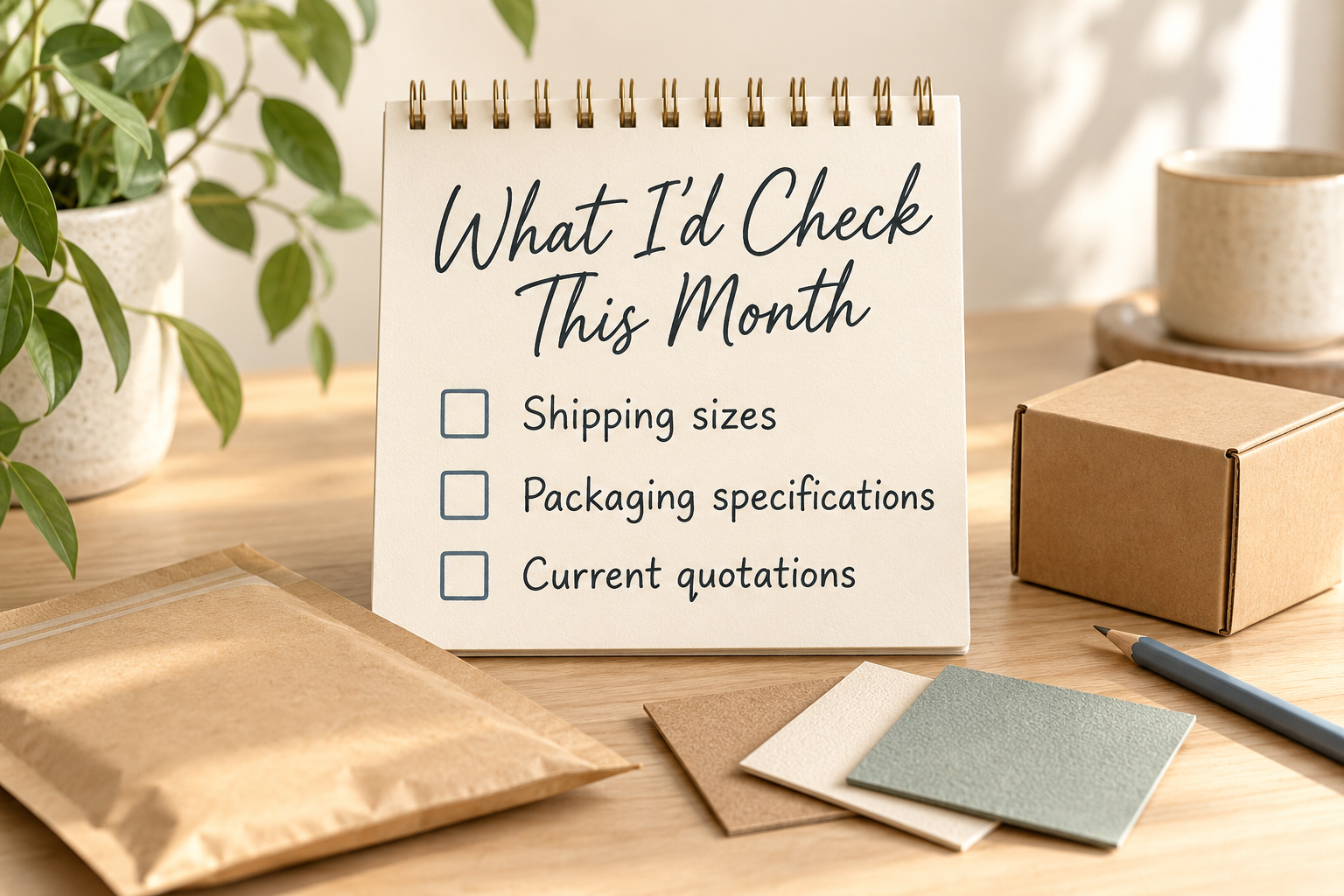
Shipping packaging: Take another look at your current carton and mailer sizes. Are you using more packaging than necessary?
California SB 54: If you sell products in California, confirm whether your business has producer obligations and whether your packaging specifications are complete.
Corrugated purchasing: If you have orders coming up, check current pricing, quote expiration dates, and any anticipated changes for early 2027.
Sharon's Take
The Pregis announcement was the story that first caught my attention this month. I liked seeing a solution that's been used for corrugated boxes find its way into another kind of shipping package. It's a reminder that packaging innovation doesn't always mean inventing something entirely new.
The other two stories bring us back to things that are a little less exciting but just as much a part of getting packaging made. Regulations are asking brands to know more about their materials, and paper pricing continues to keep everyone paying attention to costs.
What connects them for me is how much there is to consider beyond the appearance of a package. How it's made, how it's shipped, what it costs, and what happens after it's used are all part of the picture.
That's the side of packaging I enjoy exploring and sharing. There's usually more to the story than the headline.
Packaging Watch is an occasional PackagingChic series that looks beyond the headlines to explain what packaging changes really mean for brands and the people responsible for getting products to market.
