

Why Clear Packaging Specs Save Time and Money

Two packaging suppliers can receive what looks like the same request and come back with surprisingly different quotes. It's tempting to assume one supplier is simply more expensive than the other. But there's another possibility worth considering: they may not be quoting the same package.
A beautiful packaging design shows what you want the finished product to look like, but it doesn't always communicate everything needed to manufacture it. What material should be used? How will the package be printed and assembled? Does it need to run through automated equipment? These details may not be visible in the artwork, but they can have a significant impact on production costs.
This is where clear packaging specifications make a difference. They give suppliers the information needed to understand your project, recommend appropriate production methods, and prepare quotes based on consistent requirements. Without that clarity, suppliers may need to make assumptions, and those assumptions can lead to very different results.
What Exactly Are Packaging Specifications?
Packaging specifications describe the physical and production requirements of your package. Think of them as the instructions that connect the design with the manufacturing process. They go beyond how the package looks to explain how it needs to be made, how it will function, and what it must accomplish.

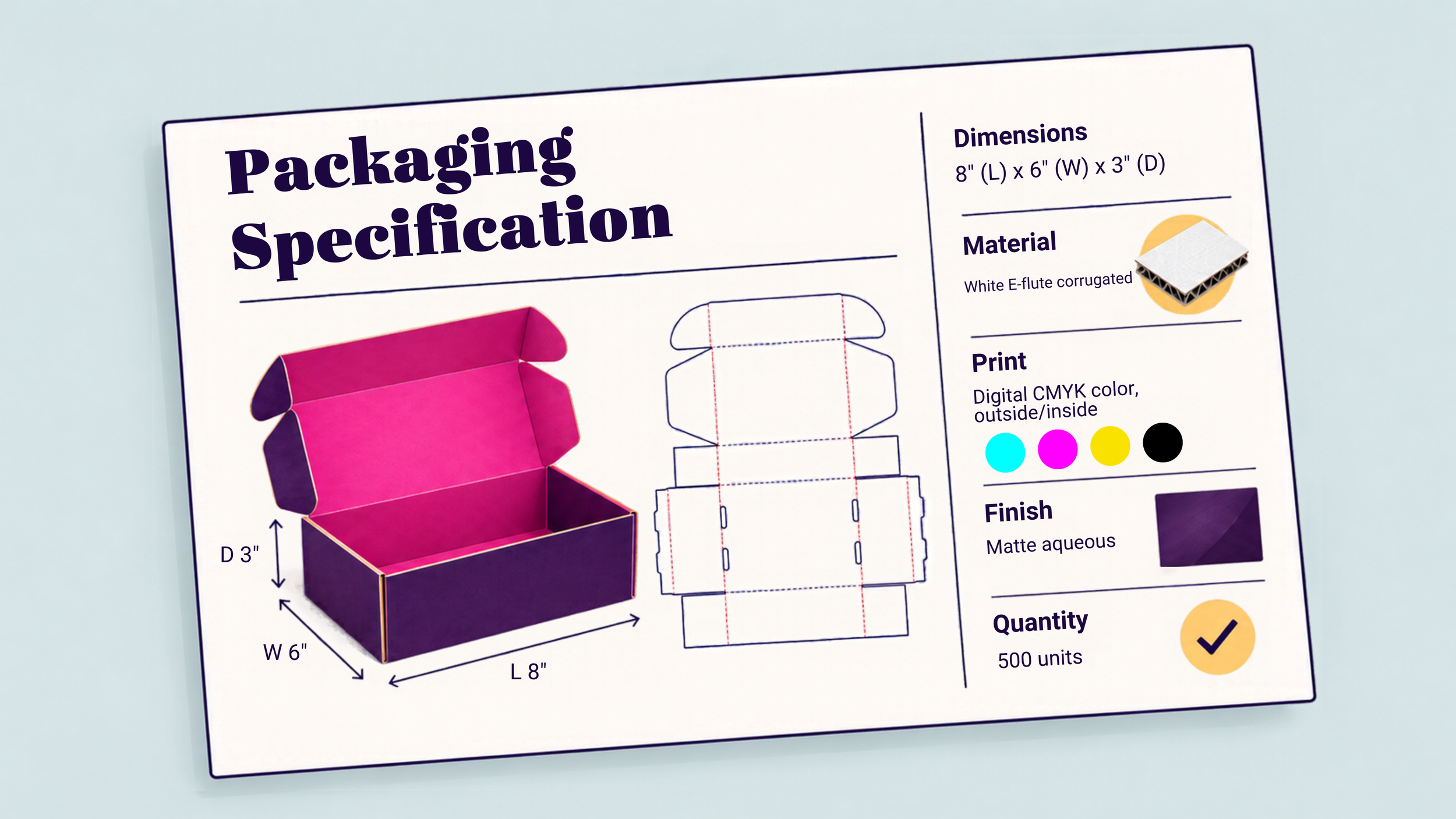
For a folding carton, specifications typically include the finished dimensions, carton structure, paperboard type and thickness, printing requirements, coatings, and decorative finishes. They also identify quantities, assembly requirements, and any special considerations related to the product being packaged. A carton that will be filled on an automated production line, for example, may have different requirements than one that will be assembled and filled by hand.

Packaging specifications should also consider what happens after the package is produced. How will the cartons be packed for shipment? How much storage space will they require? Will the finished dimensions affect how efficiently they fit into shipping cases or onto pallets? These decisions may seem far removed from the initial design, but they're all part of the larger packaging picture.
You don't need to have every technical answer before speaking with a supplier. In fact, supplier input can be extremely valuable during the planning process. What's important is identifying the requirements you already know, understanding which decisions are still open, and involving the right production expertise before the design is finalized.
Why Clear Specifications Lead to Better Quotes
Imagine sending the same folding carton design to three suppliers without specifying the paperboard or finishing requirements. One supplier might base their quote on a heavier board, while another chooses a lighter material. A third might suggest a different coating or construction method based on their equipment.
You now have three prices, but what are you actually comparing? The lowest price may reflect a different material, printing process, or construction method rather than a more competitive price for the same package. Without understanding those differences, it's difficult to make an informed decision.
When suppliers receive clear specifications, everyone has a common starting point. This makes it easier to compare quotes and understand where pricing differences come from. It also reduces the back-and-forth involved in clarifying requirements, revising estimates, and correcting assumptions.
Of course, identical specifications don't mean identical prices. Suppliers have different equipment, purchasing arrangements, production methods, and minimum order quantities. Those differences can work in your favor, particularly when a supplier identifies an alternative that improves efficiency or reduces cost without compromising the package.
Clear specifications don't replace supplier expertise. They give it a better starting point.
The Details That Affect Cost Aren't Always Obvious
Some packaging decisions are easy to recognize as cost factors. Foil stamping, embossing, specialty coatings, and unusual materials all have an impact on pricing. But other decisions are less visible, particularly when you're looking at a beautifully rendered package on a computer screen.
Consider the paperboard selected for a folding carton. Its thickness, stiffness, and grain direction can affect how the carton folds, scores, and performs during assembly. A material that appears appropriate for the design may not be the best choice for the equipment used to produce or fill it. Identifying those limitations early gives everyone an opportunity to adjust the specifications before artwork and tooling are finalized.
Dimensions deserve just as much attention. A small change in the size of an individual carton can affect the number of units that fit into a master shipping case. That can influence how many cases fit on a pallet, how much warehouse space is needed, and ultimately what it costs to move the product through distribution.
GOOD QUESTION: Does a smaller box always save money?
Not necessarily. Using less material may lower one cost, but a more complex structure, additional assembly, or a less efficient shipping arrangement can offset those savings.
This is one reason I encourage brands to look at packaging as part of a larger system rather than an isolated design project. Decisions about structure, materials, and production affect more than the appearance of the finished package. They can influence purchasing, manufacturing, freight, storage, and the customer experience. A package needs to look right, function properly, and make financial sense, and those goals are best considered together.
Plan Before You Ask for Pricing
Before requesting quotes, spend some time reviewing the packaging requirements with your design and production teams. Confirm the product dimensions and weight, consider how the package will be filled and used, and identify any structural or material requirements that are essential to its performance. It's also worth discussing expected order quantities, future production needs, and your target budget before approaching suppliers.

This is a good time to separate the features that are essential from those where you have some flexibility. Perhaps a particular finish is an important part of the brand experience, while the exact paperboard grade is open to recommendations. Or the overall package dimensions may need to stay within certain limits to work efficiently with existing shipping cases. Understanding those priorities gives suppliers a better opportunity to suggest practical alternatives.
Once the basic requirements are established, involve your manufacturing partner in reviewing the structure and dieline. A dieline is the flat technical drawing that shows where the packaging material will be cut and scored to form the finished structure. A physical prototype can then help confirm product fit, construction, and functionality before moving into full production. It's much easier to make an adjustment during planning than after tooling has been purchased or thousands of cartons have been printed.
Clear packaging specifications aren't simply a technical exercise or another document to add to the project folder. They're a communication tool that connects your creative goals with the realities of manufacturing. Taking the time to organize those details can reduce unnecessary revisions, improve quote comparisons, and help prevent costly misunderstandings later. The real value is in making informed decisions before those decisions become expensive to change.
Want to practice writing your specs? Head over to my Learning Center here!
If you're preparing to request packaging quotes and aren't sure whether you've covered the important details, the Packaging Plan Strength Assessment can help you take a closer look at your planning before moving forward.
