BLOG
Sharon’s Packaging Thoughts
Read the Archives
- March 2014 1
- February 2017 1
- February 2018 1
- July 2018 1
- January 2020 1
- August 2020 1
- September 2020 1
- August 2021 1
- July 2023 2
- October 2023 1
- November 2023 1
- April 2024 1
- May 2024 2
- July 2024 2
- December 2024 2
- January 2025 2
- February 2025 2
- March 2025 3
- April 2025 2
- May 2025 3
- June 2025 4
- July 2025 2
- August 2025 3
- September 2025 2
- October 2025 2
- November 2025 1
- January 2026 2
- April 2026 2
- May 2026 1
- June 2026 2
- July 2026 1
- August 2026 3
- September 2026 1

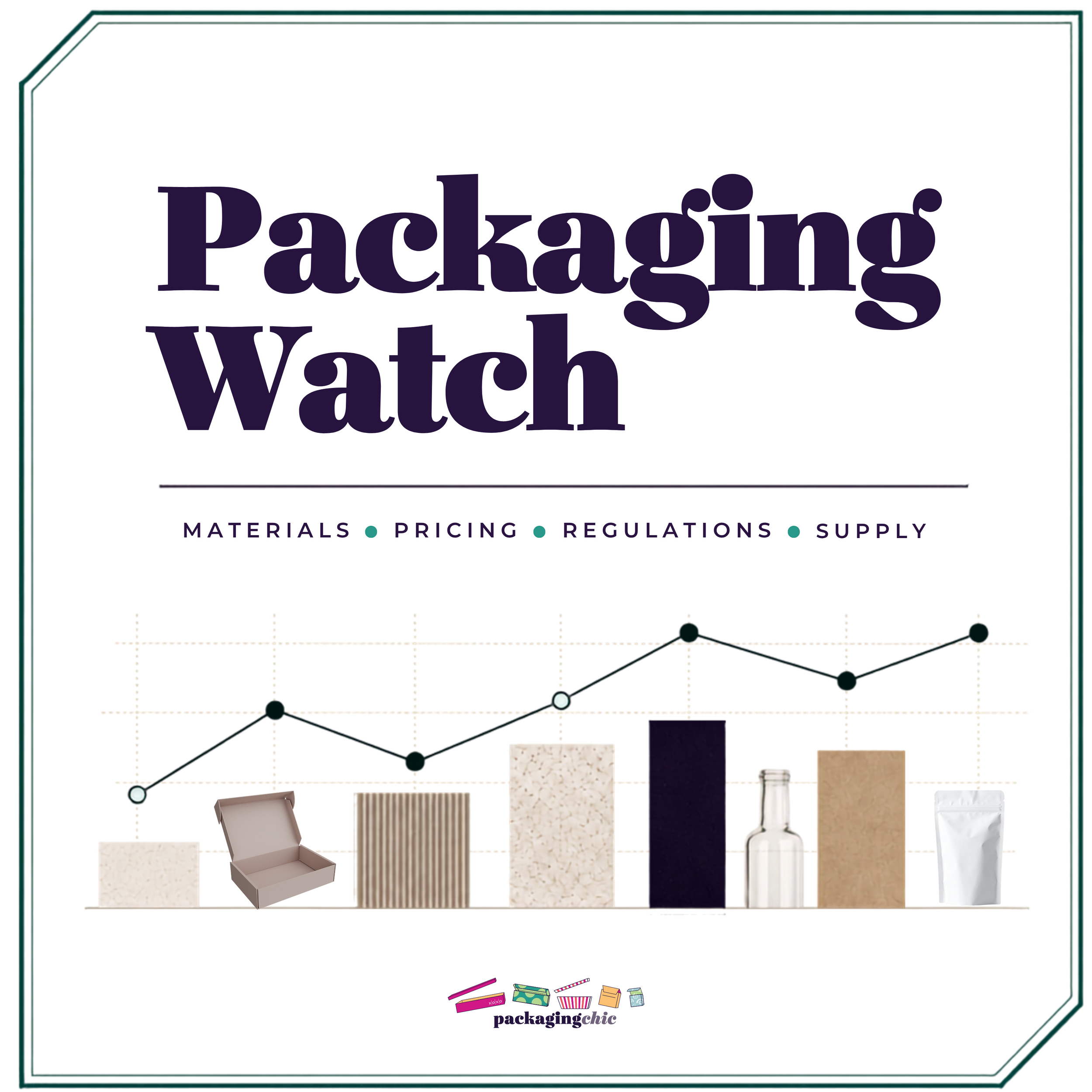
Packaging Watch | September 2026
What do this month’s packaging changes mean if you’re actually buying packaging? Containerboard price increases may affect corrugated costs, SBS lead times might be putting more attention on FBB, and new invisible print technology is giving brands another option for product authentication. Here’s what packaging buyers should know.
From the Desk of PackagingChic | August 2026
August has been one of those months where I look at my calendar and wonder if several different people are using it.
Packaging sample reviews. Client calls. AI training. Industry webinars. Mentoring. Follow-up from the Summer Packaging Challenge. And now I’m getting ready to head back to Cal Poly, where I’ll be speaking to a GrC 1000 class of students just beginning to figure out where Graphic Communication might take them.
Apparently, I like variety!
🌴What We All Learned From the First Summer Packaging Challenge™
The first Summer Packaging Challenge™ brought designers, students and packaging professionals together to explore what happens when creative ideas meet production reality. Here’s a look back at what participants learned, what surprised the reviewers, and what I learned along the way.

Packaging Waste Intelligence
When we design packaging, we spend months thinking about materials, graphics, manufacturing, shipping, retail shelves, and the customer experience. I teach and, some might say, preach about all of that all the time!
Then the package is produced, sold and opened. For most brands, that's where the story ends.
But what if you could actually see what happened next?
Did your package make it through the recycling system? Was it identified correctly?
Did it end up with the right material stream? Or did it become contamination that couldn't be recovered?
Packaging Watch | July 2026
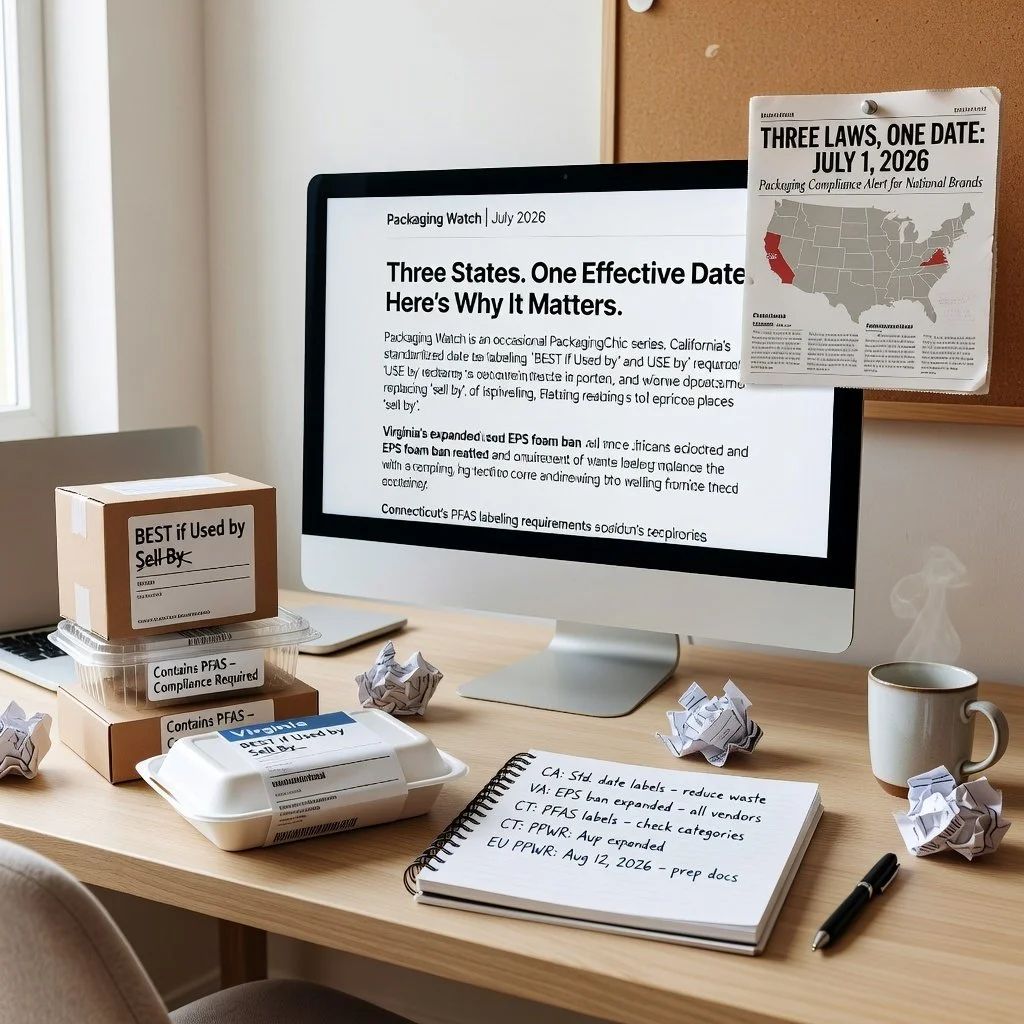
Three packaging-related laws took effect on July 1 in California, Virginia and Connecticut. Here’s what changed, who may be affected, and why these updates are worth understanding before they show up in your packaging decisions.
The Summer Packaging Challenge™: Where Creativity Meets Production Reality
Every package starts with an idea.
The challenge is turning that idea into something that not only looks good, but could actually work in the real world.
That's exactly what the Summer Packaging Challenge™ is all about.
From July 13–26, 2026, participants will tackle a series of fictional brand briefs and create packaging concepts inspired by summer. Featured Projects will be announced on July 29.
This isn't a logo challenge.
It's not a social media graphic challenge.
And it's not one of those expensive design competitions where you're paying a large entry fee just for the chance to be judged.
The Summer Packaging Challenge is designed to help you think through a packaging project the same way real brands, designers, marketers, and production teams do every day.